Ocular surface lesions in clinical grades of Bell’s phenomenon
Medical hypothesis discovery and innovation in ophthalmology,
Vol. 12 No. 4 (2023),
31 January 2024
,
Page 177-186
https://doi.org/10.51329/mehdiophthal1484
Abstract
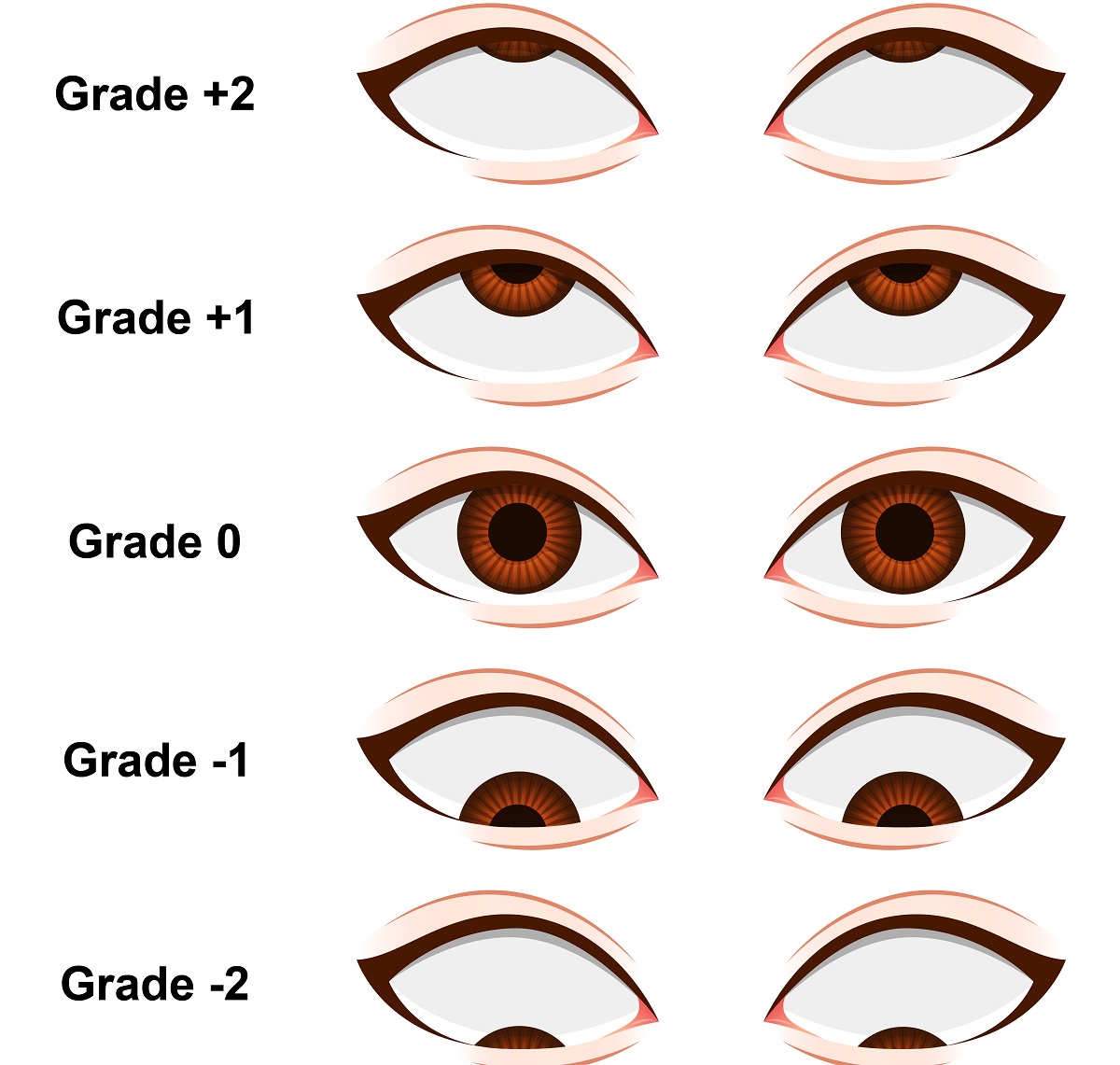
Background: Bell’s phenomenon, also known as the palpebral oculogyric reflex, is a critical reflex that protects the cornea. We developed an innovative, simple, and practical grading scale for Bell’s phenomenon that includes the inverse Bell’s phenomenon. Using this scale, we investigated the characteristics of Bell’s phenomenon among asymptomatic individuals in different age groups and examined the frequency of ocular surface lesions in asymptomatic and symptomatic participants with different grades.Methods: Bell’s phenomenon was classified into five grades: grade +2 (strong positive), grade +1 (weak positive), grade 0 (no Bell’s phenomenon, no eye movement), grade –1 (weak inverse), and grade –2 (strong inverse). In this cross-sectional study, we randomly included 330 eyes of 165 asymptomatic, healthy, White Turkish individuals who attended the outpatient eye clinic, with a male-to-female ratio of 1:1.4, in the control group. These were categorized into four age groups: 4 – 20 years, 21 – 40 years, 41 – 60 years, and > 60 years. Eighty eyes from 40 patients with ocular surface lesions and absence of grade +2 Bell’s phenomenon were included in the symptomatic group.
Results: We detected higher frequencies of grade +2, +1, and 0 in individuals aged 4 – 40, 41 – 60, and > 60 years, respectively. There was a significant difference between age groups in the frequencies of different grades (P < 0.001). Pairwise analysis revealed a significantly lower frequency of grade +2 in the age group > 60 years compared with the 4 – 20 and 21 – 40 year groups (both P < 0.05). Grade +2 was the most frequent in both sexes. We detected grade 0 in 27.1% of men and 22.1% of women in the control group, with no significant difference in the frequencies of different grades between sexes (P > 0.05). We observed significant differences between grades with respect to the frequency of ocular surface lesions (P < 0.001). Pairwise analysis revealed a significantly higher frequency of ocular surface lesions in asymptomatic individuals with grade 0 and all four other grades (all P < 0.001). However, the frequency of ocular surface lesions was comparable between sexes (P > 0.05). Of the 40 symptomatic individuals, 28 (70%), 5 (12.5%), 4 (10%), and 3 (7.5%) had grade 0, +1, –1, and –2, respectively. The number of symptomatic patients was higher in grade 0 (n = 28) than in other grades (grade +1, –1, and –2: n = 12 patients), and these individuals had a higher frequency of ocular surface lesions (n = 38 lesions) than others (grade +1, –1, and –2: 7 lesions).
Conclusions: Using a simple, practical grading scale for Bell’s phenomenon that includes inverse Bell’s phenomenon, we observed that inverse Bell’s phenomenon is a reflex that may be present in healthy individuals and could have a protective effect on the eye, although not to such a degree as a strong Bell’s phenomenon. Our observations imply that bilateral conjunctival calcifications/Vogt’s limbal girdle may be associated with grades 0 and +1 Bell’s phenomenon. Further large-scale studies are needed to determine the frequency of Bell’s phenomenon in the general population using this innovative, simple, practical grading scale, and to identify the protective or injurious effect of each grade on the ocular surface.
- Abstract Viewed: 0 times
- Full Text PDF Downloaded: 0 times


