Demographic and clinical factors associated with intraoperative patient cooperation during LASIK
Medical hypothesis discovery and innovation in ophthalmology,
Vol. 15 No. 3 (2026),
12 October 2026
,
Page 189-197
https://doi.org/10.51329/mehdiophthal1549
Abstract
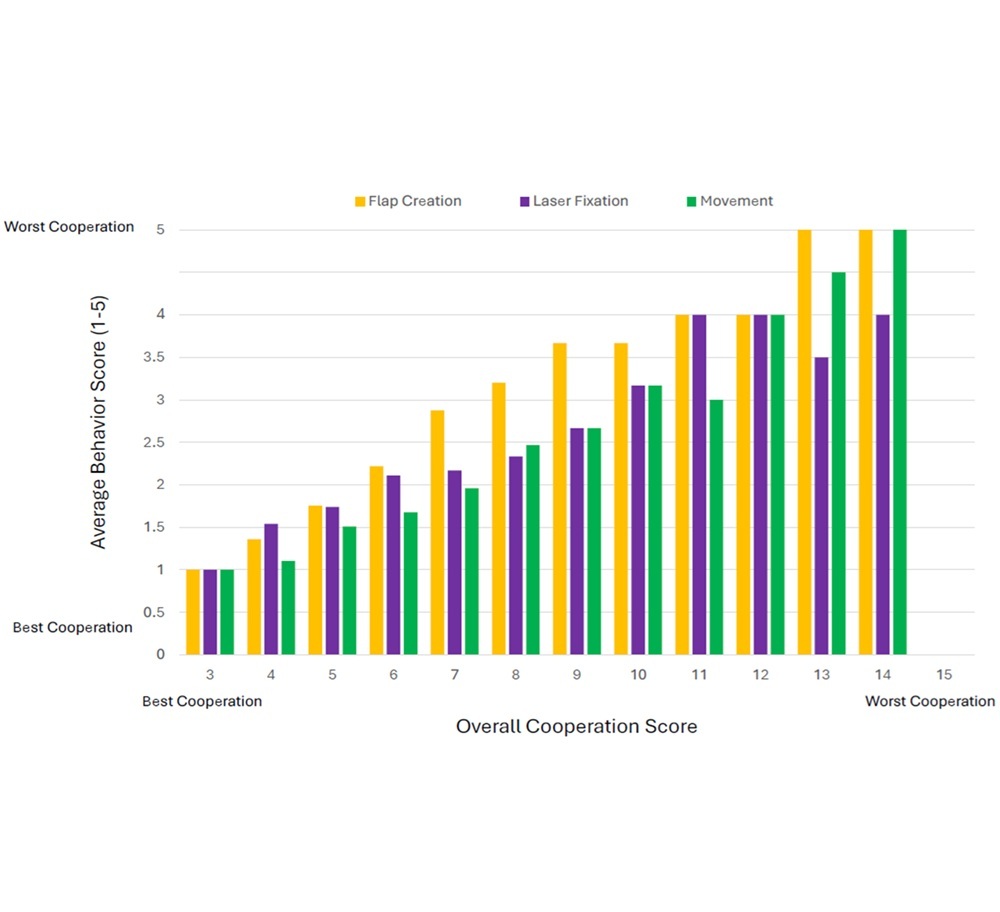
Background: Poor patient cooperation during ophthalmic surgery is demonstrated to result in a variety of complications. The purpose of this study is to evaluate demographic and clinical factors associated with intraoperative patient cooperation during laser in situ keratomileusis (LASIK) surgery.Methods: This retrospective observational study included patients who underwent LASIK at a single institution. Patients were graded intraoperatively by three observers using a 5-point scale for cooperation during flap creation, fixation during excimer laser ablation, and head/body movement, with lower scores indicating better cooperation. Ordinal regression models were used to evaluate associations between cooperation scores and demographic characteristics or medical history.
Results: A total of 836 patients were included, with a mean age of 35 years (SD, 10.3; range, 18–80 years), 454 (54.3%) male and 382 (45.7%) female; 70% of patients achieved the best overall cooperation score. Patients were significantly less cooperative during flap creation than during head/body movement (P < 0.05). Older age was associated with improved cooperation during flap creation (odds ratio [OR], 0.98; 95% confidence interval [CI], 0.96 to 1.00; P < 0.05), laser fixation (OR, 0.97; 95% CI, 0.96 to 0.99; P < 0.05), and movement (OR, 0.97; 95% CI, 0.96 to 0.99; P < 0.05). Female patients displayed significantly better cooperation only during flap creation (OR, 0.71; 95% CI, 0.53 to 0.96; P < 0.05). Longer laser duration was associated with worse cooperation during laser fixation (OR, 1.15; 95% CI, 1.05 to 1.26; P < 0.05) and movement (OR, 1.13; 95% CI, 1.02 to 1.23; P < 0.05). No significant associations were observed between overall cooperation and medical history diagnoses (all P > 0.05); however, anxiety showed an imprecise association with poorer cooperation (OR, 2.20; 95% CI, 0.97 to 5.00).
Conclusions: Patient cooperation during LASIK was generally excellent, although cooperation was worst during flap creation. Older age was modestly associated with improved cooperation across all three categories, female sex was associated only with flap-creation cooperation, and longer excimer laser duration was associated with laser fixation and movement, while no statistically significant associations with the assessed medical-history or medication variables were detected. Prospective studies in LASIK and other refractive procedures are warranted to validate and further elucidate the preliminary findings of this study.
- Abstract Viewed: 0 times
- Full Text PDF Downloaded: 0 times


